



Successful tree and vine establishment sets the trajectory for productivity, resilience, and return on investment for years to come, while saving the headache of replanting. Early-season root development is one of the most critical and vulnerable phases of the production cycle. During this window, mycorrhizal fungi can play a meaningful role in helping young plants overcome common establishment challenges and build a more functional root system from the start.
Mycorrhizal fungi are beneficial soil microorganisms capable of forming symbiotic associations with plant roots. In orchard and vineyard systems, arbuscular mycorrhizal fungi (AMF) are the most common type of mycorrhizal fungi, colonizing fine roots and extending their hyphal networks well beyond the root surface. This expanded network effectively increases the plant’s absorptive area, improving access to water and relatively immobile nutrients that are often limiting factors during early establishment, such as phosphorus, zinc, and copper.
AMF Supports Establishment of Plants During High-Risk Planting Phase
New vineyard and orchard plantings are a significant expense. Studies show that only 83% of newly planted grapes vines, 90% of nut trees, and 80-90% of fruit trees on average survive the first year after planting. Newly planted trees and vines face several agronomic stressors simultaneously: limited root systems, transplant shock, variable soil moisture, nutrient stratification, and often suboptimal soil biology. These constraints can slow early growth, delay canopy development, and reduce uniformity across a block. In perennial systems, early setbacks are difficult to fully recover from and can influence yield potential for multiple seasons.
Mycorrhizal fungi help mitigate these challenges by improving nutrient uptake and providing better access to soil moisture, enhancing the effective root zone. By accessing soil that roots alone cannot reach, fungal hyphae help young plants make better use of existing soil resources, which is particularly important when root systems are still small and establishing.
Nutrient Uptake and Root Function
Phosphorus availability is one of the most well-documented benefits of mycorrhizal colonization. In many orchard and vineyard soils, phosphorus may be present but poorly available due to fixation or low mobility. Mycorrhizal fungi increase phosphorus uptake by transporting it directly to the root, supporting early energy metabolism, root growth, and shoot development.
Beyond phosphorus, mycorrhizal associations have been shown to improve uptake of micronutrients such as zinc and copper, which play key roles in enzyme activity, hormone production, and overall plant vigor. Improved nutrient efficiency during establishment can translate into more balanced early growth for new orchards and vineyards.
Water Availability and Stress Tolerance
Water stress is another major limiting factor during establishment, particularly in moisture-deficient soils, replant situations, or regions with variable rainfall. Mycorrhizal fungi improve the plant’s access to water by increasing the effective root surface area and helping plants access moisture from a larger volume of soil. This can lead to improved water use efficiency and better tolerance to short-term drought stress during critical establishment periods.
Soil Biology and Long-Term Benefits
Introducing mycorrhizal fungi during establishment can also help jumpstart soil biological activity in newly planted blocks. Mycorrhizal fungi contribute to soil aggregation through the production of glomalin, which helps bind soil particles together. Improved soil structure supports better aeration, water infiltration, and root penetration, benefits that extend well beyond the first year.
Improving Plant Establishment with Symvado® WSP
Symvado® WSP is a mycorrhizal inoculant packaged in a water-soluble pod that can be placed directly in the planting hole for tree and vine establishment. Symvado WSP is powered by MycoApply® Arbuscular Mycorrhizal Fungi (AMF), and is designed to extend the root absorption area by up to 50x for season-long access to nutrients and water.
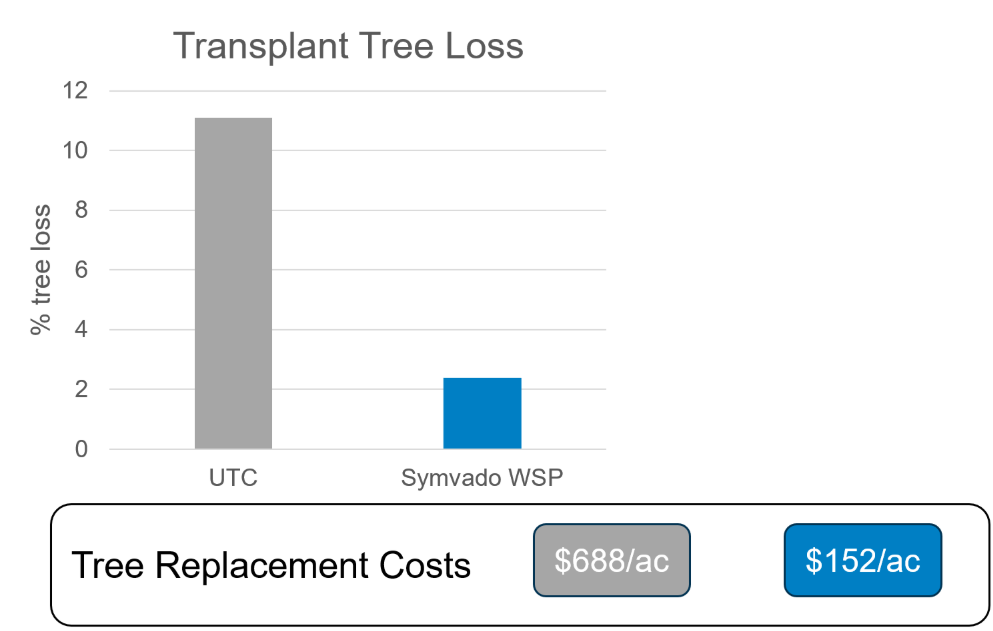
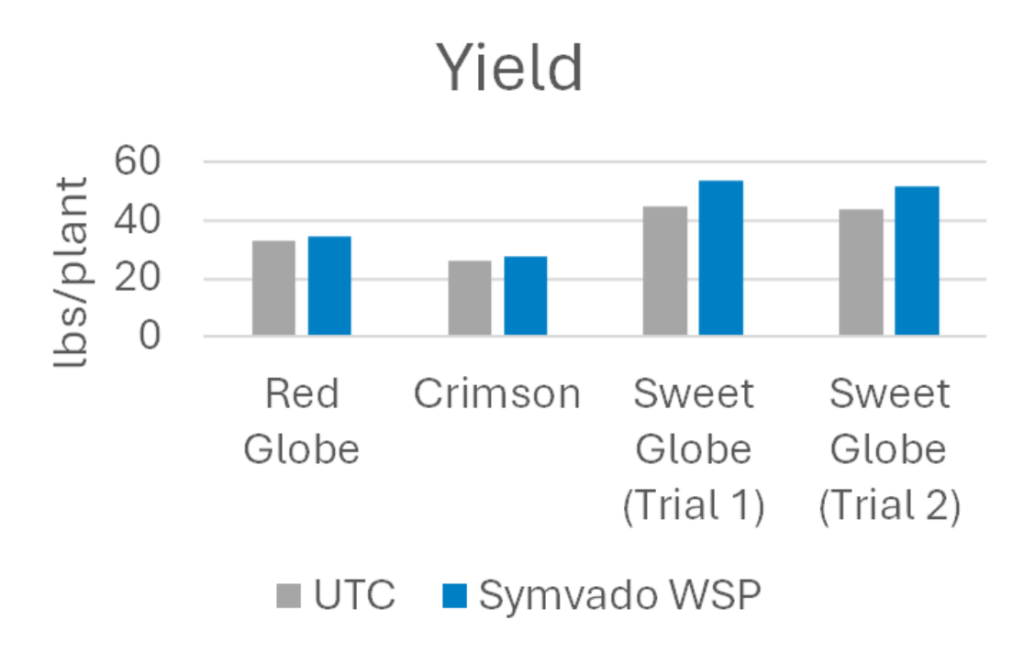
In a newly established apple orchard, Symvado WSP reduced transplant tree loss by 8.7%, resulting in a $536/acre reduction of tree replacement costs. In another study across three grape varieties, Symvado WSP increased grape yield by as much as 19.7% when compared to the grower standard.
Learn more about Symvado WSP.
A Stronger Start for Long-Term Performance
Tree and vine establishment is an investment in the future of the block. By supporting early root development, nutrient uptake, and replant stress tolerance, AMF can help young plants get off to a stronger, more uniform start. When integrated thoughtfully into an establishment program, Symvado WSP offers a valuable tool to improve efficiency in the roots, where long-term productivity begins.