


When building a fertility program, it’s easy to focus on nutrient rates and forget application strategy. But how nutrients are applied—and when—can be just as important. Fine-tuning delivery timing and placement helps stretch your budget while improving crop performance.
Soil Applications
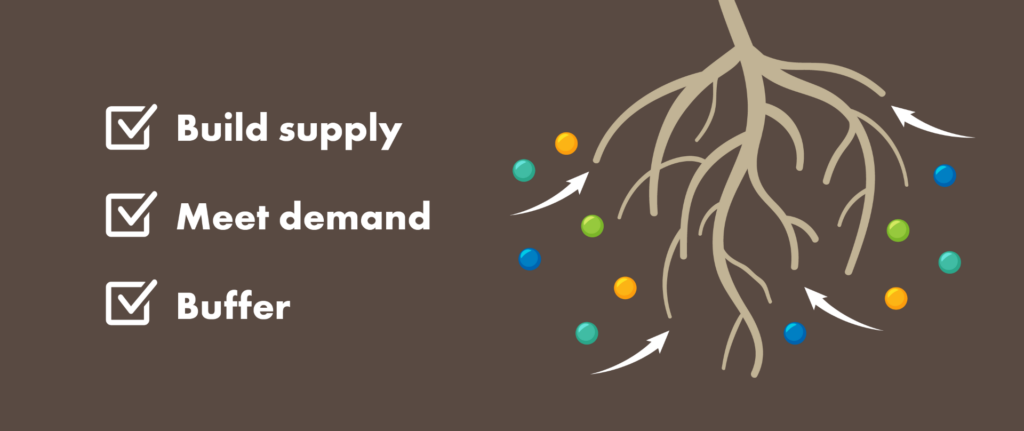
Soil applications form the foundation of any sound nutrition program by building a nutrient reservoir that plants can access throughout the season. These applications should supply the majority of a crop’s nutritional demand and are designed to support growth over an extended period, unlike foliar applications, which provide short-term support.
When growers think about soil nutrition, macronutrients (nitrogen, phosphorus, potassium, calcium, and sulfur), which are primarily applied to the soil because of the quantity of nutrients required by the plant typically come to mind. However, soil-applied micronutrients—particularly boron and zinc—can be just as critical. Placing these nutrients in the root zone improves their availability, especially for high-demand crops. For example, pistachios have exceptionally high boron requirements. Including boron in soil applications ensures a consistent supply throughout the growing season and helps buffer crops during short-term stress events when nutrient demand may spike.
Soil Applications:
Foliar Applications
Foliar applications excel at delivering nutrients quickly and efficiently. Applied directly to leaf tissue, they provide immediate nutritional support during periods of peak in-season demand. This makes foliar feeding especially valuable when timing is critical or when rapid correction of nutrient deficiencies is needed.
Foliar applications are also an efficient solution for nutrients required in smaller quantities or those that are less cost-effective to apply through soil broadcast or fertigation. Targeted foliar delivery allows growers to meet specific growth-stage demands or address unforeseen deficiencies with precision and minimal waste. As an example, ensuring ample calcium during flowering is key to setting yields in tomatoes, almonds, and apples. As calcium is non-mobile in plants, foliar applications directly support growing tissues and reduce reliance on soil uptake which may be constrained by environmental conditions.
Foliar Applications:

Better Together
The most effective nutrition programs are built around clear goals. For meeting large-scale, season-long nutrient demand, soil applications are essential. For just-in-time nutrient delivery that supports critical physiological processes, foliar applications are the tool of choice.
In practice, successful crop nutrition is about managing dynamic plant demands and pairing nutrient strategies with complementary cultural practices. For example, stacking foliar nutrition with fungicide applications can improve nutrient uptake during periods of pest pressure. Similarly, combining fertigation with targeted micronutrient injections enhances overall nutrient availability, ensuring high-demand nutrients remain accessible throughout the season to drive consistent crop growth.
Ultimately, meeting crop nutrient demand isn’t about choosing soil or foliar—it’s about using both strategically. When balanced appropriately, soil and foliar applications work together to maximize nutrient efficiency, crop performance, and return on investment