


Proper flower and cone development in hops is crucial for growers to achieve a high-quality, high-yielding crop. The processes that drive flower initiation, cone set, and cone development occur over a relatively short window, making this stage of the season one of the most critical for final outcomes. Nutrient availability, environmental conditions, and plant stress during flowering can all influence cone number, size, and uniformity at harvest.
Flower Initiation Sets the Stage
Hop flowering begins as plants transition from vegetative growth to reproductive development, a shift influenced by day length, plant vigor, and nutrient supply. During this period, the plant reallocates resources toward reproductive structures, and any environmental or nutrient limitations can reduce flower number and delay development.
Calcium plays an important role during this phase. While calcium is often associated with structural integrity, it is also essential for cell division and signaling processes that support flower development. Adequate calcium availability helps ensure proper tissue formation within the plant.
Boron and Cone Development
Once flowering has occurred, boron becomes especially important for successful cone development. Boron is involved in cell wall formation, sugar transport, and reproductive tissue growth—functions that directly impact cone set and expansion. According to the association Hop Growers of America, boron deficiency in hops can lead to crinkling and distortion of leaves, and result in poor cone formation, uneven development, or reduced cone size.
Boron demand is relatively low, but timing and availability are critical. Because boron moves with transpiration, inconsistent soil moisture or restricted root activity can limit uptake during key reproductive stages. Ensuring adequate boron availability during early cone development supports uniform growth and helps protect yield potential.
Managing Stress During a Critical Window
Environmental stress, such as heat or drought, during flowering and cone development can have lasting effects on hop yield and quality. Even short-term stress events during this window can reduce cone number or limit development, making proactive management especially important.
Supporting Flower and Cone Development with Our Hop Portfolio
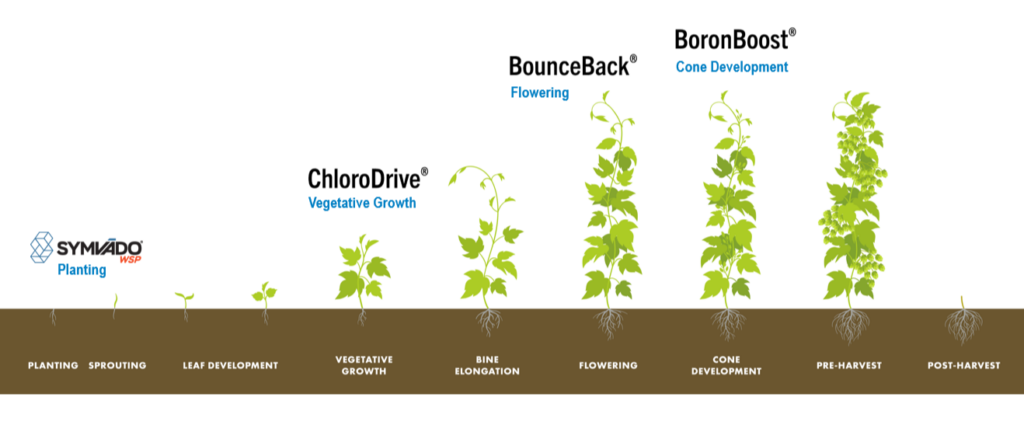
BounceBack® is a calcium and nitrogen product built with Transit® biostimulant for improved nutrient mobility and uptake within the plant, along with plant extracts for rapid relief for crops under abiotic stress. BounceBack helps enhance hop quality through improved calcium mobility and increased recovery from heat stress.
BoronBoost® is a boron product that aids in the development of hop cones. Built with our Transit biostimulant, BoronBoost supports carbohydrate movement for improved set and enhanced quality.
Additional products within our hops portfolio include Symvado® WSP for planting and ChloroDrive® during the vegetative growth stage. Use these links to learn more about Symvado WSP and ChloroDrive.
Supporting Yield and Quality from Flower to Cone
Successful cone and flower development in hops depends on more than just meeting basic nutrient requirements. Calcium and boron play distinct roles in flowering and cone formation, and their availability during key stages can influence final yield and quality by supporting consistent development during one of the most important phases of the hops growing season.