


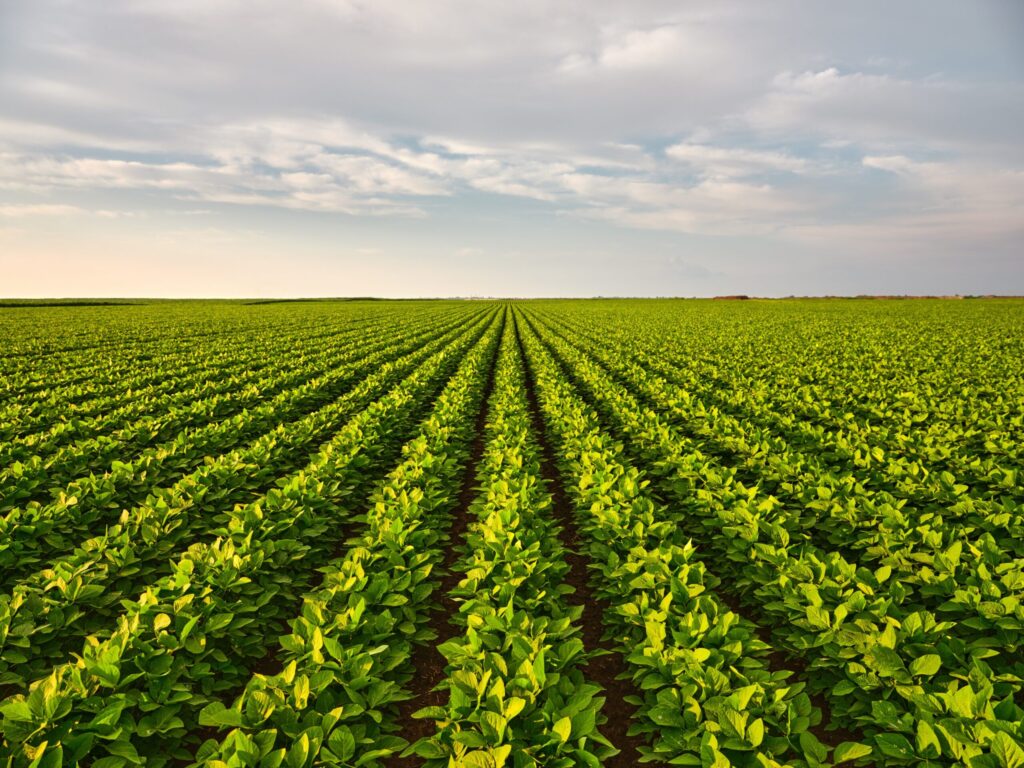
Soybeans move through key growth stages quickly. From early vegetative growth through flowering and pod development, the crop’s nutrient demand increases rapidly. While soil-applied fertility programs provide the foundation, foliar feeding can help support plant nutrition during periods when demand is high or nutrient availability is limited.
Foliar Feeding in Soybeans
Soybean plants rely on a steady supply of nutrients to support canopy development, photosynthesis, and reproductive growth. Several factors can limit how efficiently nutrients move from the soil into the plant, including:
- High soil pH that reduces micronutrient availability
- Nutrient tie-up in certain soil types
- Rapid plant growth that temporarily outpaces uptake
- Dry soil conditions
Foliar feeding allows nutrients to be delivered directly to leaves, where they can be absorbed and used by the plant relatively quickly. This approach can help maintain physiological function when root uptake is less efficient.
Key Nutrients Included in Foliar Programs
Several nutrients are commonly targeted in soybean foliar feeding programs, particularly micronutrients tied to plant metabolism.
Zinc supports enzyme activity, hormone production, and protein synthesis. These processes influence plant growth and canopy development during early vegetative stages.
Manganese plays an important role in photosynthesis and nitrogen metabolism. Adequate manganese levels help support energy production as the plant builds leaf area and begins preparing for reproductive growth.
Timing Foliar Applications
Foliar feeding is most effective when timed with the nutrient uptake demand.
- Early vegetative stages (V3–V5) are one of the most common windows for foliar nutrition. During this stage, the canopy is expanding quickly and nutrient demand increases. Many growers include foliar nutrition with post-emergence herbicide passes.
- Late vegetative to early reproductive stages can provide another opportunity to support plant activity as the crop transitions toward flowering and pod set.
Applications during these stages help ensure the crop maintains momentum as yield components begin to develop.
Supporting Nutrient Efficiency
For optimal delivery of foliar nutrients during critical windows, biostimulants are key to support nutrient translocation and mobility. When working together with foliar nutrition, biostimulants like Transit® can help plants use nutrients more efficiently and maintain consistent activity during periods of growth.
Transit® is a biostimulant that utilizes organic acids to support plant growth and nutrient translocation. Foliar applications of Transit support increased leaf area for greater photosynthetic capacity. See our full portfolio of bionutrient products built with Transit biostimulant, including PodOn® and Manron®, and connect with your local Valent BioSciences sales rep to learn how the Transit portfolio of products can fit within your operation.
Supporting a Strong Nutrition Program
Foliar feeding in soybeans provides a valuable management tool that helps reinforce plant performance during key growth stages. By improving nutrient availability and plant metabolism throughout the season, foliar programs, supported by the right biostimulant, can help soybeans maintain steady growth as they move from vegetative development into flowering and pod formation.