


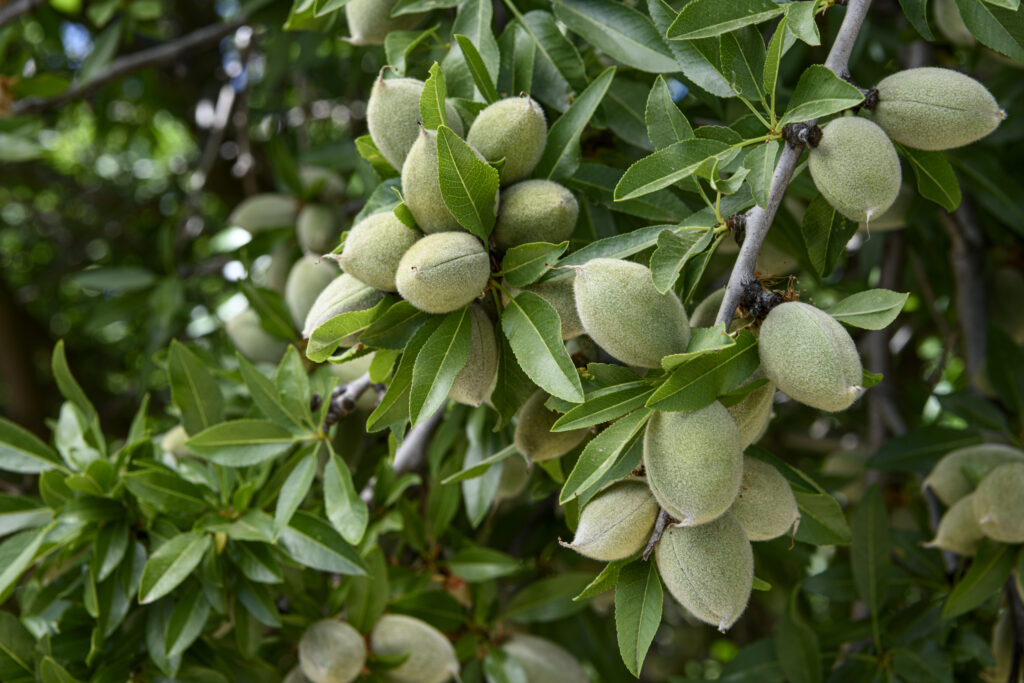
By the time May arrives in tree nut orchards, the pace of the season has shifted. Bloom is behind us, nut set is established, and growers are starting to see the early indicators of crop size. It’s also the point in the season when crop estimates begin circulating, markets start reacting, and decisions made in the orchard continue to directly influence the crop that will be harvested later in the year.
Why May Matters for Tree Nuts
During May, nut growth accelerates. Leaves are fully active, the canopy is expanding, and trees are producing the carbohydrates needed to support kernel development.
At this stage, the crop becomes a major sink for energy. Every nut on the tree requires a steady flow of carbohydrates produced through photosynthesis in the leaves. If carbohydrate production falls behind demand due to stress, nutrient limitations, or canopy inefficiencies, the tree begins to make tradeoffs. These can show up later in the season as:
- Smaller kernels
- Increased nut drop
- Reduced final yield potential
To achieve a larger crop, the tree requires more energy, and supporting photosynthesis becomes more important to sustain development.
Supporting Photosynthesis During Heavy Crop Load
When orchards aim to carry a large crop, maximizing the efficiency of the leaf canopy becomes a key management focus. Healthy leaves are the engine that drives carbohydrate production, which ultimately fills the nut.
Foliar nutrition applications during this period are often aimed at:
- Supporting photosynthetic efficiency
- Improving nutrient uptake
- Enhancing overall leaf function
These strategies help maintain the steady production of sugars and other metabolites needed to support the developing crop.
The Role of Zicron®
Applied with May spray programs, our foliar zinc and manganese product Zicron® supports leaf metabolism and photosynthetic activity. Built with Transit® biostimulant, Zicron improves the plant’s ability to produce and mobilize photosynthates, which help maintain the energy supply needed to support nut growth. In practical terms, that means helping the tree continue producing the carbohydrates required to fill the crop it has already set.
If a grower’s crop estimates suggest a large almond year, this becomes especially relevant. A heavy crop increases the demand placed on the tree’s photosynthetic system. According to University of California Agriculture and Natural Resources, poor nut growth will occur due to lack of sufficient zinc before one can see deficiency symptoms on the tree. Supporting leaf performance during May helps the tree keep pace with that demand.
Building Toward Harvest
Although harvest still feels far away in May, the foundation for yield is being built right now. Nut size, kernel development, and final yield are all influenced by how effectively the tree can supply energy during the early growth stages. Supporting canopy health and carbohydrate production during this period helps position the crop for stronger performance later in the season.
As growers evaluate crop estimates, market signals, and orchard conditions, maintaining strong photosynthetic capacity can help ensure the crop that is developing on the tree reaches its full potential.